Tree Identification, Lifespans, Roots & Common Problems
A UK Homeowner’s Guide
An established tree can be a wonderful feature in a garden, providing shade, privacy and a home for wildlife. However, it can also raise questions. What kind of tree is it? How tall might it grow? Could its roots affect your house or paving? And should you be concerned if its leaves start falling in summer or fungus appears on its branches?
Understanding the tree you have, how it grows and what is normal for its species can help you make informed decisions about its care. Some changes are a natural part of a tree’s life cycle, while others may indicate stress, disease or structural problems that deserve closer attention.
In this guide, compiled using questions our tree surgeons are frequently asked, we explain how to identify common UK trees, what to expect from their growth and lifespan, how their roots behave and which warning signs are worth investigating. We also explain when advice from a professional tree surgeon can help you understand what is happening and whether any action is necessary.
What Tree Is This? How to Identify a Tree
If you have inherited a mature tree with a property or have one growing in your garden that you cannot identify, start by looking at several features rather than relying on a single characteristic.
The most useful clues include:
- Leaves: Look at their shape, size, edges and arrangement. Are they simple leaves, such as those of an apple tree, or divided into several smaller leaflets, as found on an ash tree?
- Bark: Examine the colour, texture and pattern. Young trees often have smoother bark than mature specimens, so take the tree’s age into account.
- Buds and branches: The size, shape and arrangement of buds can help distinguish between species, particularly in winter when leaves are absent.
- Flowers: Blossom can provide an important clue in spring. Apple and crab apple trees, for example, produce distinctive flowers.
- Fruit, seeds and nuts: Acorns suggest an oak, while the paired, winged seeds known as ash keys are characteristic of ash trees.
- Overall shape: Consider the tree’s height, crown shape and branching pattern. The crown, also called the canopy, is the part formed by the branches and foliage.
The time of year matters. A deciduous tree may look very different in winter from how it appears in summer, while pruning, age, disease and growing conditions can all affect its shape.
If you are asking, “What kind of tree is this?”, photographs of the whole tree, its leaves, bark and any flowers or fruit can help you narrow down the possibilities. A reputable tree-identification guide or identification app can be a useful starting point, although results should be checked if the identification will influence a decision about tree care or safety.
Correct identification is particularly important when investigating an unfamiliar growth pattern, possible disease or concerns about mature size. Different species have different characteristics, and a symptom that is normal for one tree may be unusual for another.
For more information about recognising potential problems, see our guide to how to tell if a tree is diseased, dying or dangerous.
What Does an Ash Tree Look Like?
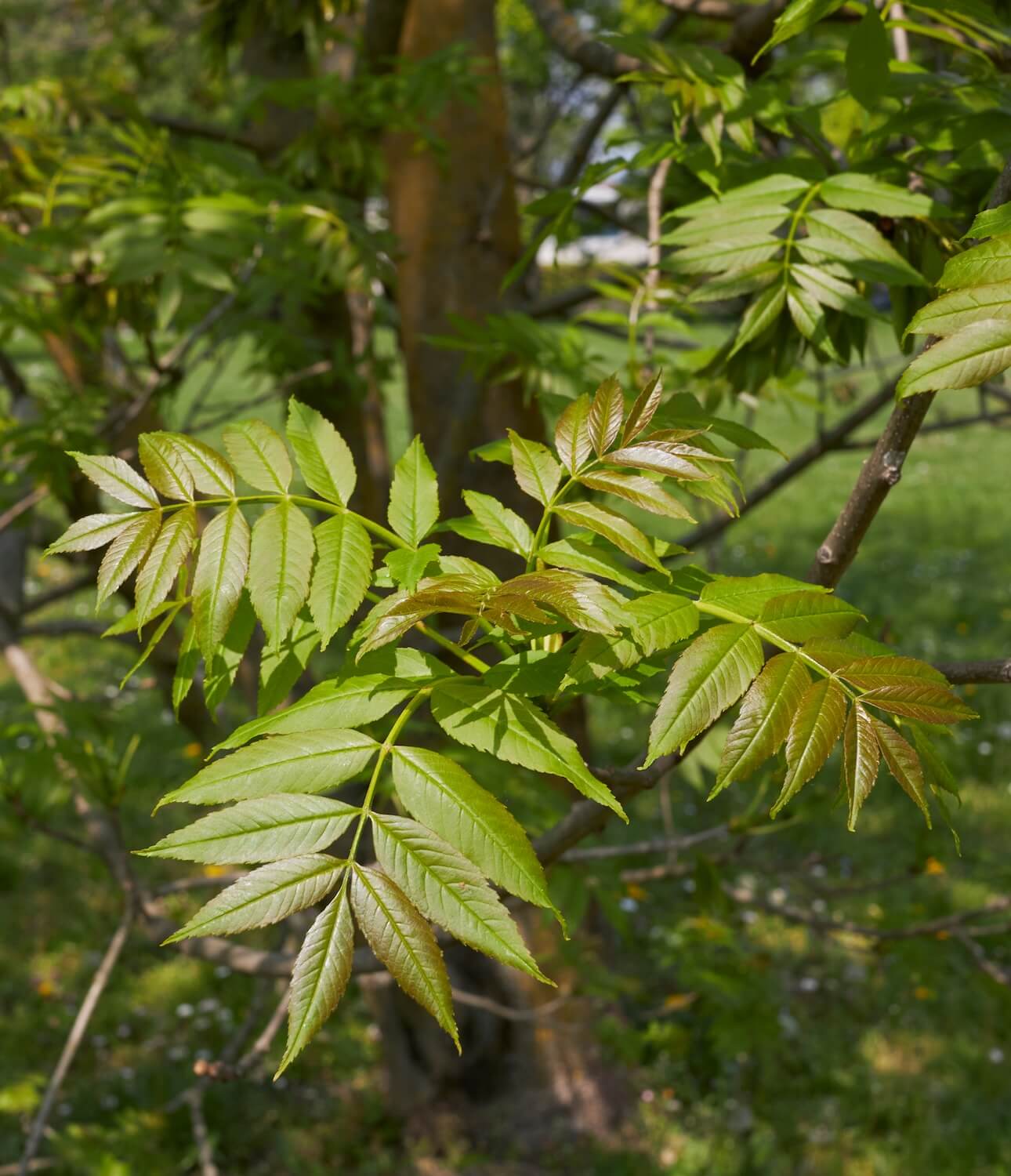
An ash tree (Fraxinus excelsior) is a native British tree that can grow into a tall, substantial feature in a garden or landscape. Its appearance changes with the seasons, but several characteristics make ash tree identification easier.
- Leaves: The Ash has compound leaves, meaning that each leaf consists of several smaller leaflets arranged in pairs along a central stem, usually with one additional leaflet at the tip. The leaflets are elongated, with pointed ends and toothed edges. Ash leaves are generally dark green during summer and turn yellow before falling in autumn.
- Bark: Young ash trees tend to have relatively smooth, greyish bark. As the tree matures, the bark develops deeper ridges and fissures, creating a more textured appearance.
- Buds: The dark, almost black buds are a particularly useful identifying feature, especially in winter. They sit in opposite pairs along the branches, helping distinguish ash from many other trees.
- Seeds: Ash produces clusters of winged seeds known as ash keys. They often remain on the tree after the leaves have fallen, making them another useful clue.
- Overall shape: Mature ash trees can develop a tall trunk and an open crown with upward-reaching branches. Their appearance varies according to their growing environment and how much space they have had to develop.
Ash can sometimes be confused with other trees with compound leaves. Looking at the dark buds, the arrangement of the leaflets and the distinctive ash keys together is more reliable than using leaf shape alone.
It is also worth remembering that ash dieback, a disease that affects ash trees, can cause leaf loss, dead shoots and branches, and progressive deterioration. These symptoms are not exclusive to ash dieback, however, so an accurate assessment is important before drawing conclusions.
How Tall Do Ash Trees Grow in the UK?
A mature common ash tree can typically reaches around 20 to 35 metres in height, although some specimens grow taller in favourable conditions.
Ash is a relatively fast-growing tree when young, particularly where it has sufficient light, space, moisture and suitable soil. Its eventual height depends on several factors, including:
- The tree’s age and genetic characteristics.
- Soil depth, drainage and nutrient availability.
- Competition from nearby trees and buildings.
- Exposure to wind and other environmental conditions.
- Disease, physical damage and previous pruning.
This potential size is worth considering when assessing an ash tree growing close to a house, garden boundary, driveway or overhead cables. A tree planted in a small garden may eventually outgrow the space available for it, while one in a large garden or open landscape may have ample room to develop.
However, a large ash tree is not automatically a dangerous tree. Height alone does not determine whether a tree is structurally sound or likely to fail. Its condition, branch structure, root stability, surrounding environment and any signs of disease or damage are all relevant.
If an established ash tree is close to your home, it may be sensible to seek advice about its condition and likely management needs. A qualified tree professional can assess the tree and explain whether monitoring, pruning or other work is appropriate.
How Long Do Trees Live?
There is no single answer to how long a tree lives. Tree lifespan varies considerably between species and is influenced by growing conditions, disease, physical damage and how the tree has been managed throughout its life.
Some ornamental trees have relatively short lifespans, while certain native broadleaf trees can survive for several centuries. Even trees of the same species may age very differently depending on their surroundings.
A tree’s appearance can also be misleading. An old tree may remain healthy and stable, while a younger tree may develop problems following damage, poor growing conditions or disease. Equally, a tree with a hollow trunk or dead branches is not automatically beyond saving, although these features may warrant closer inspection.
How Long Do Apple Trees Live in the UK?
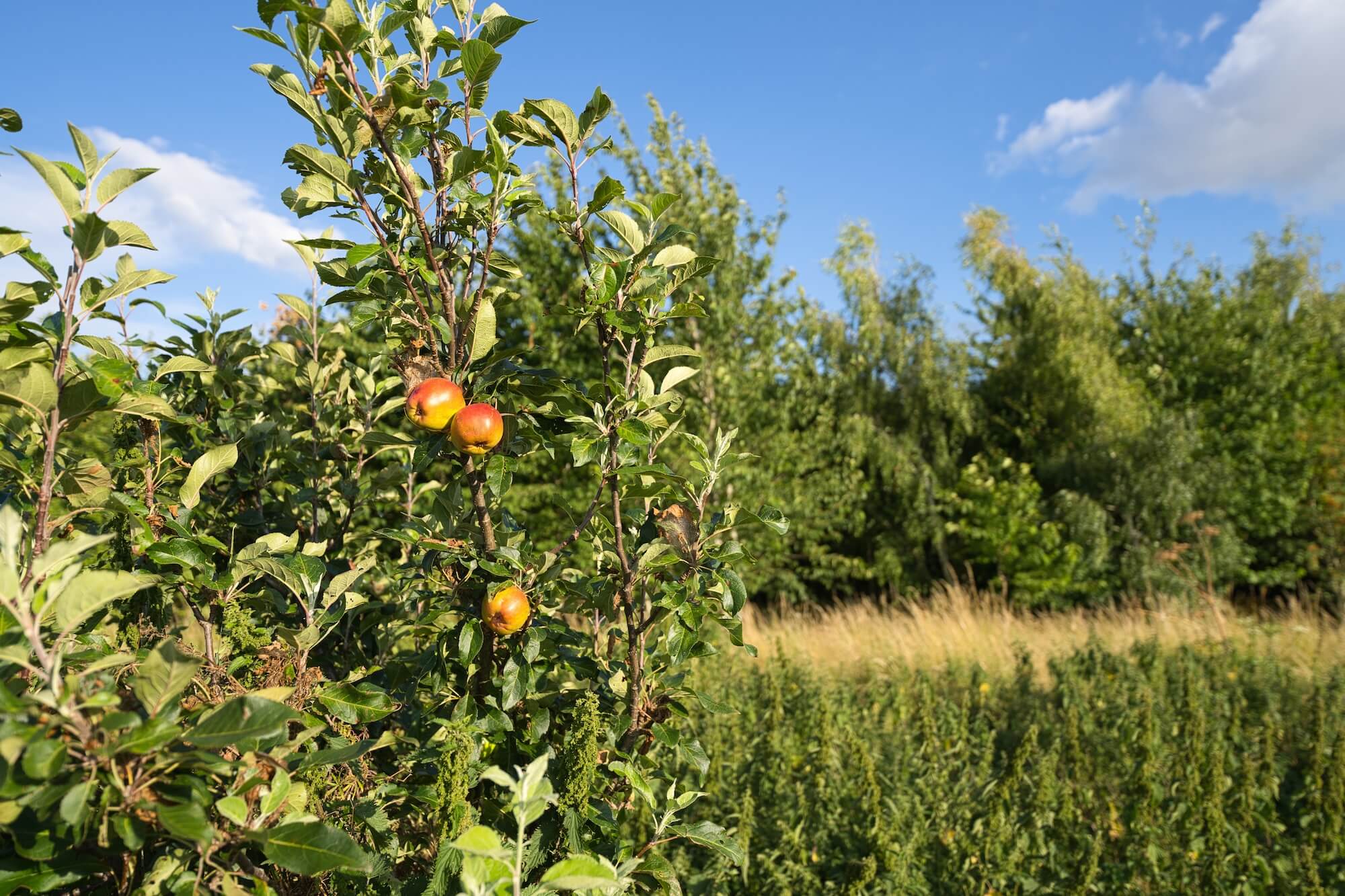
Apple trees commonly live for around 30 to 50 years, although some garden specimens can live considerably longer when well cared for and growing in suitable conditions.
Their lifespan depends partly on the variety and rootstock. Many modern apple trees are grafted onto rootstocks selected to control their size and influence how they grow. Trees on dwarfing rootstocks may have a shorter productive life than vigorous trees grown on stronger rootstocks.
Other factors affecting apple tree lifespan include:
- Pruning: Appropriate pruning can maintain a manageable shape and encourage healthy growth. Excessive or poorly timed cutting may cause unnecessary stress.
- Disease: Fungal diseases, cankers and other infections can weaken branches and affect the tree’s long-term health.
- Growing conditions: Suitable soil, good drainage and enough sunlight support healthy development.
- Physical damage: Damaged bark, broken limbs and repeated injuries can create opportunities for disease and decay.
- General maintenance: Removing diseased fallen fruit and dead material where appropriate can help reduce some sources of infection.
An older apple tree may produce less fruit than it once did, but reduced cropping does not necessarily mean the tree is dying. If it has significant dieback, extensive decay or repeated fungal problems, investigate the cause before deciding what to do.
How Long Do Maple Trees Live?
Maple trees do not have one standard lifespan because the name covers many different species, including field maple, sycamore and various ornamental maples.
Some smaller ornamental maples may live for several decades, while larger species can survive for a century or longer in suitable conditions. Their eventual lifespan depends on the species, growing environment, disease resistance and level of damage they experience.
Field maple, a native UK species, can become a substantial tree over time, while Japanese maples are generally smaller and are often grown for their attractive foliage.
If you have a maple in your garden, identifying the species will help you understand its likely mature size and care requirements. Its age alone is not a reliable indicator of health: look at the condition of the leaves, branches, bark and overall crown as well.
Do Crab Apple Trees Have Invasive Roots?
Crab apple trees do not generally have highly invasive roots, and they are often suitable for domestic gardens when planted in an appropriate position. However, like any tree, they develop a root system that needs enough space and suitable soil conditions.
Crab apples are usually smaller than many large shade trees, although their mature size depends on the variety and rootstock. Their roots commonly spread outwards through the upper layers of soil, where oxygen, moisture and nutrients are available. The extent of the root system depends on the tree’s size, soil conditions and the space available.
Can crab apple roots damage paving?
Roots may grow beneath paths, patios and driveways in search of favourable growing conditions. As roots thicken, they can sometimes lift paving or disturb lightweight garden structures. This is more likely where the soil is shallow, compacted or restricted, although the precise risk varies from site to site.
Visible roots are not necessarily a problem. In many gardens, they are a normal feature of a mature tree and can be accommodated without intervention.
Could crab apple roots affect a house?
Tree roots do not ordinarily break through sound foundations simply because a tree is growing nearby. However, roots can exploit existing cracks or joints in drains, and some trees can contribute to changes in moisture levels in certain soils. Clay soils, in particular, can shrink as they dry, potentially affecting buildings where ground conditions and foundations make them susceptible.
The risk depends on the tree species, its size, the distance from the property, soil type, drainage and the construction of the building. It is therefore unwise to assume that a nearby tree is responsible for every crack or instance of subsidence.
If you have noticed cracking, lifting paving, damaged drains or exposed roots close to a building, investigate the cause before taking action against the tree. Our tree surgeons can help assess the tree and its surroundings, while building movement or suspected subsidence may require advice from a structural engineer or other appropriate specialist.
For more detail, read our guide to tree felling and managing trees near buildings, which explains why location, condition and the available management options all matter.
Fungus on an Apple Tree: What Should You Do?
If you notice fungus on an apple tree, the first step is to identify the problem rather than immediately apply a treatment. Fungus is a broad term covering many different organisms and diseases, and the right response depends on what is affecting the tree.
Common signs of a fungal problem or other disease include:
- Leaves: White powdery coatings, unusual spots, discolouration, curling or premature leaf loss.
- Fruit: Brown or rotting patches, discolouration or fruit that shrivels before it can be harvested.
- Bark and branches: Sunken or discoloured areas, cracks, dead sections or patches of damaged bark.
- Growth on the tree: Mushrooms, brackets or other fungal structures growing on the trunk, branches or around the base.
Not every symptom is caused by a fungal disease. Poor growing conditions, pests, physical damage and other factors can produce similar changes, so look at the whole tree before deciding what is wrong.
How to treat fungus on apple trees
The appropriate treatment depends on the diagnosis. Some problems can be managed through improved growing conditions and routine maintenance, while others may need more targeted intervention.
A few sensible steps can help maintain the health of an apple tree:
- Remove fallen diseased material where appropriate. Collecting affected leaves and rotting fruit can help reduce sources of infection for certain diseases. Dispose of material responsibly, following relevant advice for the suspected problem.
- Maintain good growing conditions. Avoid unnecessary root disturbance and damage to the trunk. Water newly planted trees appropriately during dry periods, and avoid routinely keeping the soil waterlogged.
- Prune carefully when necessary. Removing affected branches may help with certain problems, but the timing and extent of pruning matter. Avoid cutting away large amounts of healthy growth in an attempt to eliminate an unidentified disease.
- Identify the problem before using a treatment. Fungicides are not effective against every fungal problem, and products must be suitable for the intended use. Always follow the label and current guidance.
If you are wondering how to get rid of fungus on an apple tree, resist the temptation to treat every white patch, spot or mushroom in the same way. A powdery coating on leaves, for example, is a different problem from a bracket fungus growing on a tree trunk.
When is apple tree fungus more concerning?
Fungal growth on the trunk or at the base of an apple tree can sometimes be associated with internal decay. Bracket fungi may indicate that wood is decomposing, but their presence alone does not establish how extensive the decay is or whether the tree is unsafe.
Professional advice is worthwhile if fungal growth is accompanied by substantial dead branches, extensive dieback, a deteriorating trunk, cracks or other structural changes. A tree assessment can help establish what the signs may mean and whether monitoring or management is appropriate.
Why Are the Leaves Falling Off My Maple Tree in June?
If your maple tree is losing leaves in June, the cause may be environmental stress, pests, disease or root problems rather than the normal autumn leaf fall. The timing is unusual for most deciduous maples in the UK, but it does not automatically mean the tree is dying.
Look at the pattern of leaf loss and check for other symptoms before deciding whether to intervene.
Common reasons for premature leaf drop:
-
Heat and drought stress: Hot, dry weather can cause a tree to lose moisture faster than its roots can replace it. Leaves may wilt, develop brown edges or fall prematurely. Newly planted trees and those growing in restricted soil can be particularly vulnerable.
-
Excess water or poor drainage: Roots need oxygen as well as moisture. Waterlogged soil can restrict oxygen supply, damage roots and lead to yellowing leaves or canopy decline.
-
Pests: Certain insects feed on leaves or damage plant tissue, sometimes causing discolouration, distortion or early leaf fall. Look for visible insects, sticky deposits, unusual markings or damaged foliage.
-
Disease: Fungal and other diseases can affect maple leaves, producing spots, patches of dead tissue or general discolouration. The pattern of damage can help narrow down the possibilities, although it may not provide a definitive diagnosis.
-
Root disturbance: Excavations, construction, soil compaction or changes in ground level can affect the roots’ ability to take up water and nutrients. Symptoms may appear some time after the disturbance.
-
Other environmental stress: Strong winds, sudden temperature changes, pollution and damage to branches can all affect foliage. Sometimes several factors contribute to the same problem.
What should you check?
Look at whether the leaves are affected across the entire tree or only on particular branches. Check whether they are yellowing, browning, spotted or wilting before they fall. Also inspect the bark, branches and visible roots, and consider whether there have been recent changes to watering, drainage or the ground around the tree.
A small amount of leaf damage may be temporary, particularly following adverse weather. However, widespread leaf loss in June, repeated premature leaf drop, significant branch dieback or a sudden change in the tree’s condition deserves closer attention.
Avoid applying treatments or cutting back branches until you have a clearer idea of the cause. If the maple continues to deteriorate, a professional tree health assessment can help determine whether it needs treatment, changes to its growing conditions or further investigation.
Is a Lepidodendron Tree Dangerous?
Lepidodendron was an ancient, tree-like plant, not a tree species found growing in modern UK gardens. It is therefore not something a homeowner would normally need to identify or manage as a living garden tree, despite myths circulating online.
Lepidodendron lived hundreds of millions of years ago, particularly during the Carboniferous Period. These large, spore-producing plants formed part of prehistoric swamp forests and could grow to considerable heights. Their remains contributed to the deposits from which many coal seams developed.
The name may appear in fossil collections, educational resources or discussions about prehistoric plants. If you have come across it while researching tree identification, it is useful to distinguish the fossil genus from living trees.
If someone has identified a tree in your garden as Lepidodendron, the identification is almost certainly mistaken. Return to the observable features of the living plant, including its leaves, bark, buds, flowers and seeds, to narrow down its actual species.
Tree Health Quick Check: What Should You Look For?
A quick visual check can help you spot changes in a tree and decide whether further advice might be useful. You do not need specialist knowledge to notice when something looks different, although identifying the cause may require professional expertise.
Use this checklist when looking at a tree in your garden:
-
Canopy: Does the crown look broadly as it did in previous seasons? Are there large gaps, extensive dead areas or sudden changes in its shape?
-
Leaves: Are the leaves developing normally for the time of year? Look for widespread discolouration, unusual spots, wilting or premature leaf loss.
-
Bark and trunk: Are there new cracks, damaged areas, cavities or unusual growths that were not previously visible?
-
Branches: Are there significant dead branches, broken limbs or branches hanging precariously?
-
Visible roots and ground: Have roots been damaged or exposed by excavation? Is there new ground cracking, lifting or movement around the base of the tree?
A single symptom does not necessarily indicate a serious problem. Some trees naturally develop cavities, lose occasional branches or change their appearance with age. What matters is the combination of signs, the tree’s history and whether its condition is changing.
If you notice a significant change, take photographs from a safe distance and compare them over time where appropriate. Do not climb the tree or approach hanging branches to investigate, and keep people away from an area where a branch appears likely to fall.
When Should You Get a Tree Checked?
Consider arranging a professional tree inspection if you notice significant deadwood, broken or hanging branches, substantial dieback, unusual fungal growth accompanied by deterioration, new structural cracks, damaged roots or unexplained leaning or movement.
Sudden changes deserve particular attention, especially following storms, excavation or other disturbance. A tree that has developed a pronounced lean, has a newly split trunk or appears to have lifted at its base should be assessed promptly. If it appears to present an immediate danger to people or property, keep clear and seek urgent professional advice.
A tree inspection is not simply a search for reasons to remove a tree. Its purpose is to understand the tree’s condition, identify potential hazards and establish what action, if any, is justified.
Depending on the findings, the appropriate response might involve:
-
Monitoring the tree for further changes.
-
Removing dead or damaged branches.
-
Pruning to address a specific problem or manage the crown.
-
Investigating a suspected disease or structural defect.
-
Seeking specialist advice where roots, buildings or other structures may be affected.
In some circumstances, removal may be the most appropriate option, but it should not be the automatic response to a large tree, visible roots, fungus or premature leaf loss.
It is also important to check whether a tree is protected by a Tree Preservation Order (TPO) or lies within a conservation area before arranging work. Restrictions may apply even when the tree is on private property.
For a clearer understanding of the options available, explore our professional tree surgery services, including tree inspections, pruning and other tree management work.
Expert Tree Advice from West Country Tree Services
Understanding a tree’s species, expected lifespan, root behaviour and common health problems can help you look after it more confidently. However, when something changes unexpectedly, identifying the cause is often more useful than reacting to the symptom alone.
Established in 2010 by owner and director Dan Potter, West Country Tree Services provides professional tree care across Bath, Wiltshire and Somerset. Our qualified tree surgeons work to BS3998 standards for tree work, following risk-assessed working practices and drawing on professional arboricultural knowledge to help customers make informed decisions.
We are an International Society of Arboriculture certified company and carry £5 million public liability insurance and £10 million employers’ liability insurance.
Whether you are concerned about an ash tree’s condition, an apple tree with fungal growth, roots close to your house or an unfamiliar tree that has grown larger than expected, we can help you understand the options.
Our team works throughout the region, including Bath and towns across Wiltshire and Somerset, including Melksham, Chippenham, Trowbridge, Bradford-on-Avon, Corsham and Warminster.
If you remain unsure about a tree’s identity, health or safety, contact West Country Tree Services for a friendly, no-pressure conversation. We offer free, no-obligation quotations and can advise on whether a professional assessment or tree work may be appropriate.
Call us on 01225 345137 or 07759 205453, or email enquiries@westcountrytreeservices.co.uk.
The key is to understand the tree and the cause of any problem before deciding what to do. With the right advice, you can make informed choices about pruning, treatment, monitoring or other work while giving your trees the care they need.