How to Tell if a Tree Is Dangerous
If you’ve ever watched a team of tree surgeons at work, you’ll know it looks both impressive and complex. What might seem like simply cutting down a tree is, in reality, a carefully planned and highly skilled operation governed by strict safety standards. At West Country Tree Services, every job — whether it’s a routine crown reduction or a full tree removal — follows a rigorous process designed to protect our team, our clients, and the surrounding environment.
In this guide, we take you behind the scenes to explain exactly how tree work is carried out safely, from the moment we arrive on site to the final sweep of the chipper.
Is your tree unsafe?
Standing in your garden, looking up at a tree that’s probably been there longer than your house, it’s natural to wonder is this thing actually safe? Maybe a storm rolled through last night and left branches scattered across the lawn. Maybe you’ve just noticed a lean that wasn’t there before.
The tricky part is that trees don’t always advertise their problems. A tree can look perfectly healthy from your kitchen window while hiding a serious structural issue that only becomes obvious once you know what to look for. Which is exactly why one of our qualified tree surgeons can spot risks that youwould walk straight past.
Common Warning Signs of a Dangerous Tree
Some issues are easier to catch once you know where to look:
-
Dead branches
-
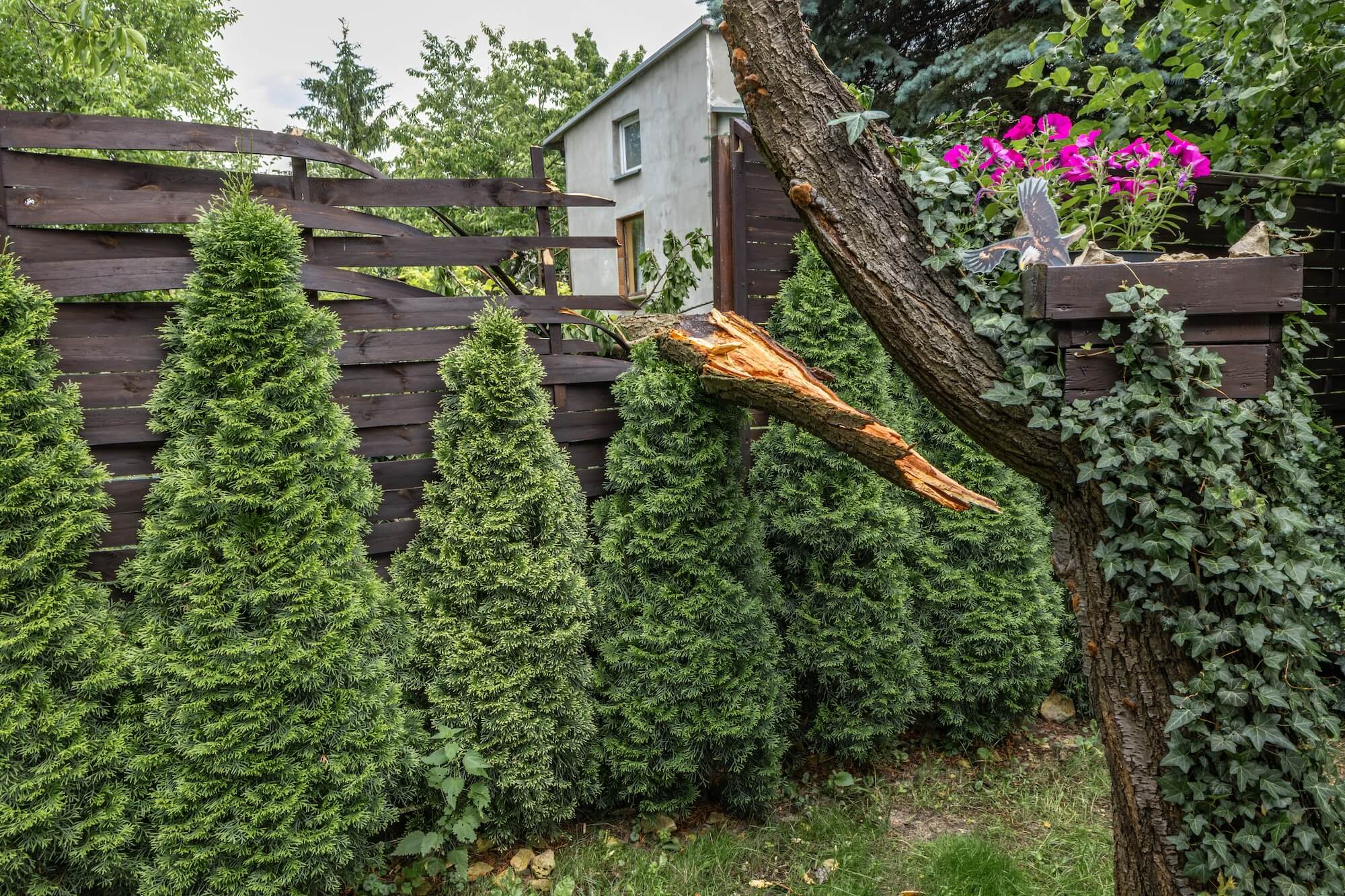
Large cracks in the trunk or major branches
-
Cavities or hollow sections
-
Fungal growth
-
A noticeable new/worse lean
-
Exposed or damaged roots
-
A thinning or dead canopy
Many dangerous trees still look perfectly healthy from a distance, with serious defects are often internal or hidden high in the canopy. This is why a professional set of eyes can put your mind at ease.
Trees That Need Immediate Attention
Some situations shouldn’t wait for a routine check-up. If you notice any of the following, it’s worth calling us sooner rather than later:
-
Branches hanging over roads, driveways, or footpaths
-
A tree that’s started leaning after a storm
-
Large trees close to your home, garage, or garden structures
-
Split or partially split trunks
Small defects can escalate quickly, especially in high winds. A hairline crack that seems minor today can turn into a hazard during the next bout of severe weather. So it’s better to get these checked before the weather can test the tree’s limits.

What Happens During a Professional Tree Safety Inspection
If you’re still unsure, a professional inspection takes the guesswork out of it entirely. Our qualified arborists will typically:
-
Carry out a full visual assessment of the trunk, canopy, and surrounding ground
-
Check for structural defects, including cracks, cavities, and included bark
-
Look for signs of disease or fungal infection
-
Assess root health and any signs of root damage or instability
-
Provide clear, practical recommendations — whether that’s monitoring, pruning, or removal
A good inspection isn’t about talking you into unnecessary work. It’s about giving you an honest, expert read on what’s actually happening with your tree, based on real structural and biological evidence rather than guesswork.
Book a professional tree inspection
At West Country Tree Services, we are pleased to offer superior tree surgery across Wiltshire and Somerset, including Bath, Bradford-on-Avon, Calne, Chippenham, Corsham, Devizes, Peasedown St John, Malmesbury, Melksham, Swindon, Trowbridge, Warminster, Royal Wootton Bassett, and Westbury. We take pride in our work, and this is reflected in our Check A Trade and Google reviews.
We offer free, no obligation quotes, all confirmed in writing for your peace of mind.
If you’re looking for a trustworthy tree surgeon to assess any hazardous tree(s), please feel free to contact West Country at any time call Dan on 01225 345137 or 07759 205453 or email our friendly expert team at enquiries@westcountrytreeservices.co.uk. We look forward to hearing from you!